With the Christmas carols and such playing already, here is a list of gathered Christmas facts and trivia. enjoy.
"Hot cockles" was a popular game at Christmas in medieval times. It was a game in which the other players took turns striking the blindfolded player, who had to guess the name of the person delivering each blow. "Hot cockles" was still a Christmas pastime until the Victorian era.
"White Christmas" (1954), starring Bing Crosby and Danny Kaye, was the first movie to be made in Vista Vision, a deep-focus process.
"The Nutcracker" is the name for the ballet performed around Christmas time each year. "The Nutcracker Suite" is the title of the music Tchaikovsky wrote.
"Wassail" comes from the Old Norse "ves heill"--to be of good health. This evolved into the tradition of visiting neighbors on Christmas Eve and drinking to their health.
A Christmas club, a savings account in which a person deposits a fixed amount of money regularly to be used at Christmas for shopping, came about around 1905.
A traditional Christmas dinner in early England was the head of a pig prepared with mustard.
According to a 1995 survey, 7 out of 10 British dogs get Christmas gifts from their doting owners.
According to historical accounts, the first Christmas in the Philippines was celebrated 200 years before Ferdinand Magellan discovered the country for the western world, likely between the years 1280 and 1320 AD.
According to the National Christmas Tree Association, Americans buy 37.1 million real Christmas trees each year; 25 percent of them are from the nation's 5,000 choose-and-cut farms.
After "A Christmas Carol," Charles Dickens wrote several other Christmas stories, one each year, but none was as successful as the original.
Alabama was the first state to recognize Christmas as an official holiday. This tradition began in 1836.
Although many believe the Friday after Thanksgiving is the busiest shopping day of the year, it is not. It is the fifth to tenth busiest day. The Friday and Saturday before Christmas are the two busiest shopping days of the year.
American billionaire Ross Perot tried to airlift 28 tons of medicine and Christmas gifts to American POW's in North Vietnam in 1969.
America's official national Christmas tree is located in King's Canyon National Park in California. The tree, a giant sequoia called the "General Grant Tree," is over 300 feet (90 meters) high. It was made the official Christmas tree in 1925.
An artificial spider and web are often included in the decorations on Ukrainian Christmas trees. A spider web found on Christmas morning is believed to bring good luck.
An average household in America will mail out 28 Christmas cards each year and see 28 eight cards return in their place.
Animal Crackers are not really crackers, but cookies that were imported to the United States from England in the late 1800s. Barnum's circus-like boxes were designed with a string handle so that they could be hung on a Christmas tree.
As early as 1822, the postmaster in Washington, D.C. was worried by the amount of extra mail at Christmas time. His preferred solution to the problem was to limit by law the number of cards a person could send. Even though commercial cards were not available at that time, people were already sending so many home-made cards that sixteen extra postmen had to be hired in the city.
At Christmas, Ukrainians prepare a traditional twelve-course meal. A family's youngest child watches through the window for the evening star to appear, a signal that the feast can begin.
At lavish Christmas feasts in the Middle Ages, swans and peacocks were sometimes served "endored." This meant the flesh was painted with saffron dissolved in melted butter. In addition to their painted flesh, endored birds were served wrapped in their own skin and feathers, which had been removed and set aside prior to roasting.
Before settling on the name of Tiny Tim for his character in "A Christmas Carol," three other alliterative names were considered by Charles Dickens. They were Little Larry, Puny Pete, and Small Sam.
California, Oregon, Michigan, Washington, Wisconsin, Pennsylvania and North Carolina are the top Christmas tree producing states. Oregon is the leading producer of Christmas trees - 8.6 million in 1998.
Candy canes began as straight white sticks of sugar candy used to decorated the Christmas trees. A choirmaster at Cologne Cathedral decided have the ends bent to depict a shepherd's crook and he would pass them out to the children to keep them quiet during the services. It wasn't until about the 20th century that candy canes acquired their red stripes.
Charles Dickens' initial choice for Scrooge's statement "Bah Humbug" was "Bah Christmas."
Child singer Jimmy Boyd was 12 years and 11 months old when he sang the Christmas favorite, "I Saw Mommy Kissing Santa Claus." The song hit the top of the pop charts.
Christmas caroling began as an old English custom called Wassailing - toasting neighbors to a long and healthy life.
Christmas Day in the Ukraine can be celebrated on either December 25, in faithful alliance with the Roman Catholic Gregorian calendar, or on January 7, which is the Orthodox or Eastern Rite (Julian calendar), the church holy day.
Christmas is a summer holiday in South Africa. Children are fond of the age-old custom of producing pantomimes - for instance, "Babes in the Wood," founded on one of the oldest ballads in the English language. Boxing Day on December 26th, when boxes of food and clothing are given to the poor, is observed as a holiday.
Christmas is not widely celebrated in Scotland. Some historians believe that Christmas is downplayed in Scotland because of the influence of the Presbyterian Church (or Kirk), which considered Christmas a "Papist," or Catholic event. As a result, Christmas in Scotland tends to be somber.
Christmas presents were known in antiquity among kings and chieftains, especially on the European continent. However, they have been common among ordinary people in Iceland only during the past 100 or so years.
Christmas trees are edible. Many parts of pines, spruces, and firs can be eaten. The needles are a good source of vitamin C. Pine nuts, or pine cones, are also a good source of nutrition.
Christmas trees are known to have been popular in Germany as far back as the sixteenth century. In England, they became popular after Queen Victoria's husband Albert, who came from Germany, made a tree part of the celebrations at Windsor Castle. In the United States, the earliest known mention of a Christmas tree is in the diary of a German who settled in Pennsylvania.
Christmas was once a moveable feast celebrated at many different times during the year. The choice of December 25, was made by Pope Julius I, in the 4th century A.D., because this coincided with the pagan rituals of Winter Solstice, or Return of the Sun. The intent was to replace the pagan celebration with the Christian one.
Cultured Christmas trees must be shaped as they grow to produce fuller foliage. To slow the upward growth and to encourage branching, they are hand-clipped in each spring. Trees grown in the wild have sparser branches, and are known in the industry as "Charlie Brown" trees.
During the ancient 12-day Christmas celebration, the log burned was called the "Yule log." Sometimes a piece of the Yule log would be kept to kindle the fire the following winter, to ensure that the good luck carried on from year to year. The Yule log custom was handed down from the Druids.
During the Christmas buying season, Visa cards alone are used an average of 5,340 times every minute in the United States.
During the Christmas/Hanukkah season, more than 1.76 billion candy canes will be made.
During World War II it was necessary for Americans to mail Christmas gifts early for the troops in Europe to receive them in time. Merchants joined in the effort to remind the public to shop and mail early and the protracted shopping season was born.
Electric Christmas tree lights were first used in 1895. The idea for using electric Christmas lights came from an American, Ralph E. Morris. The new lights proved safer than the traditional candles.
Following Princess Diana's tragic death in 1997, the Ty toy company, famous in the late 1990s for its popular Beanie Baby line of beanbag animals, issued a "Princess" bear in tribute. The royal purple Beanie, bearing an embroidered white rose on its chest, became so desired that at Christmas time, American collectors were willing to spend up to $300 for one on the secondary market.
For every real Christmas tree harvested, 2 to 3 seedlings are planted in its place.
There are two Christmas Islands.
The Christmas Island in the Pacific Ocean was formerly called Kiritimati. Christmas Island in the Indian Ocean is 52 square miles.
Frankincense is a sweet smelling gum resin derived from certain Boswellia trees which, at the time of Christ, grew in Arabia, India, and Ethiopia. Tradition says that it was presented to the Christ Child by Balthasar, the black king from Ethiopia or Saba. The frankincense trade was at its height during the days of the Roman Empire. At that time this resin was considered as valuable as gems or precious metals. The Romans burned frankincense on their altars and at cremations.
Franklin Pierce was the first United States' president to decorate an official White House Christmas tree .
Frumenty was a spiced porridge, enjoyed by both rich and poor. It is thought to be the forerunner of modern Christmas puddings. It has its origins in a Celtic legend of the harvest god Dagda, who stirred a porridge made up of all the good things of the Earth.
Frustrated at the lack of interest in his new toy invention, Charles Pajeau hired several midgets, dressed them in elf costumes, and had them play with "Tinker Toys" in a display window at a Chicago department store during the Christmas season in 1914. This publicity stunt made the construction toy an instant hit. A year later, over a million sets of Tinker Toys had been sold.
George Washington spent Christmas night 1776 crossing the Delaware River in dreadful conditions. Christmas 1777 fared little better - at Valley Forge, Washington and his men had a miserable Christmas dinner of Fowl cooked in a broth of Turnips, cabbage and potatoes.
Greeks do not use Christmas trees or give presents at Christmas. A priest may throw a little cross into the village water to drive the kallikantzari (gremlin-like spirits) away. To keep them from hiding in dark, dusty corners, he goes from house to house sprinkling holy water.
Hallmark introduced its first Christmas cards in 1915, five years after the founding of the company.
Historians have traced some of the current traditions surrounding Father Christmas, or Santa Claus, back to ancient Celtic roots. Father Christmas's elves are the modernization of the "Nature folk" of the Pagan religions; his reindeer are associated with the "Horned God," which was one of the Pagan deities.
If traveling in France during the Christmas season, it is interesting to note that different dishes and dining traditions reign in popularity in different parts of the country. In south France, for instance, a Christmas loaf (pain calendeau) is cut crosswise and is eaten only after the first part has been given to a poor person. In Brittany, buckwheat cakes and sour cream is the most popular main dish. In Alsace, a roasted goose is the preferred entrée. In Burgundy, turkey and chestnuts are favored. In the Paris region, oysters are the favorite holiday dish, followed by a cake shaped like a Yule log.
In 1647, the English parliament passed a law that made Christmas illegal. Festivities were banned by Puritan leader, Oliver Cromwell, who considered feasting and revelry, on what was supposed to be a holy day, to be immoral. The ban was lifted only when the Puritans lost power in 1660.
In 1752, 11 days were dropped from the year when the switch from the Julian calendar to the Gregorian calendar was made. The December 25, date was effectively moved 11 days backwards. Some Christian church sects, called old calendarists, still celebrate Christmas on January 7 (previously December 25 of the Julian calendar).
In 1907, Oklahoma became the last US state to declare Christmas a legal holiday.
In 1937, the first postage stamp to commemorate Christmas was issued in Austria.
In 1947, Toys for Tots started making the holidays a little happier for children by organizing its first Christmas toy drive for needy youngsters.
In 1996, Christmas caroling was banned at two major malls in Pensacola, Florida. Apparently, shoppers and merchants complained the carolers were too loud and took up too much space.
In an effort to solicit cash to pay for a charity Christmas dinner in 1891, a large crabpot was set down on a San Francisco street, becoming the first Salvation Army collection kettle.
In America, the weeks leading up to Christmas are the biggest shopping weeks of the year. Many retailers make up to 70% of their annual revenue in the month preceding Christmas.
In Armenia, the traditional Christmas Eve meal consists of fried fish, lettuce, and spinach. The meal is traditionally eaten after the Christmas Eve service, in commemoration of the supper eaten by Mary on the evening before Christ's birth.
In Britain, eating mince pies at Christmas dates back to the 16th century. It is still believed that to eat a mince pie on each of the Twelve Days of Christmas will bring 12 happy months in the year to follow.
In Britain, the Holy Days and Fasting Days Act of 1551, which has not yet been repealed, states that every citizen must attend a Christian church service on Christmas Day, and must not use any kind of vehicle to get to the service.
In Finland and Sweden an old tradition prevails, where the twelve days of Christmas are declared to be time of civil peace by law. It used to be that a person committing crimes during this time would be liable to a stiffer sentence than normal.
In France, Christmas is called Noel. This is derived from the French phrase "les bonnes nouvelles," which means literally "the good news" and refers to the gospel.
In Greek legend, malicious creatures called Kallikantzaroi (also spelled Kallikantzari) sometimes play troublesome pranks at Christmas time. According to the legend, to get rid of them, you should burn either salt or an old shoe. Apparently the stench of the burning shoe (or salt) drives off the Kallikantzaroi. Other effective methods include hanging a pig's jawbone by the door and keeping a large fire so they can't sneak down the chimney.
In Guatemala, Christmas Day is celebrated on December 25; however, Guatemalan adults do not exchange gifts until New Year's Day. Children get theirs (from the Christ Child) on Christmas morning.
In Medieval England, Nicholas was just another saint - he had not yet been referred to as Santa Claus and he had nothing to do with Christmas.
In North America, children put stockings out at Christmas time. Their Dutch counterparts, however, use shoes. Dutch children set out shoes to receive gifts any time between mid-November and December 5, St. Nicholas' birthday.
In Norway on Christmas Eve, visitors should know that after the family's big dinner and the opening of presents, all the brooms in the house are hidden. The Norwegians long ago believed that witches and mischievous spirits came out on Christmas Eve and would steal their brooms for riding.
In Portugal, the traditional Christmas meal (consoada) is eaten in the early hours of Christmas Day. Burning in the hearth is the Yule log (fogueira da consoada). The ashes and charred remains of the Yule log are saved; later in the year, they are burned with pine cones during Portugal's thunderstorm season. It is believed that no thunderbolt will strike where the Yule log smoke has traveled.
In southern France, some people burn a log in their homes from Christmas Eve until New Year's Day. This stems from an ancient tradition in which farmers would use part of the log to ensure a plentiful harvest the following year.
In Sweden, a common Christmas decoration is the Julbock. Made from straw, it is a small figurine of a goat. A variety of straw decorations are a usual feature of Scandinavian Christmas festivities.
In Syria, Christmas gifts are distributed by one of the Wise Men's camels. The gift-giving camel is said to have been the smallest one in the Wise Men's caravan.
In the British armed forces it is traditional that officers wait on the men and serve them their Christmas dinner. This dates back to a custom from the Middle Ages.
In the Netherlands, Christmas centers on the arrival of Saint Nicholas, who is believed to come on horseback bearing gifts. Before going to bed, children leave out their shoes, hoping to find them filled with sweets when they awaken.
In the Thomas Nast cartoon that first depicted Santa Claus with a sleigh and reindeer, he was delivering Christmas gifts to soldiers fighting in the U.S. Civil War. The cartoon, entitled "Santa Claus in Camp," appeared in Harper's Weekly on January 3, 1863.
In the Ukraine, a traditional Christmas bread called "kolach" is placed in the center of the dining table. This bread is braided into a ring, and three such rings are placed one on top of the other, with a candle in the center of the top one. The three rings symbolize the Trinity.
In Victorian England, turkeys were popular for Christmas dinners. Some of the birds were raised in Norfolk, and taken to market in London. To get them to London, the turkeys were supplied with boots made of sacking or leather. The turkeys were walked to market. The boots protected their feet from the frozen mud of the road. Boots were not used for geese: instead, their feet were protected with a covering of tar.
It is a British Christmas tradition that a wish made while mixing the Christmas pudding will come true only if the ingredients are stirred in a clockwise direction.
It is estimated that 400,000 people become sick each year from eating tainted Christmas leftovers.
Jesus Christ, son of Mary, was born in a cave, not in a wooden stable. Caves were used to keep animals in because of the intense heat. A large church is now built over the cave, and people can go down inside the cave. The carpenters of Jesus' day were really stone cutters. Wood was not used as widely as it is today. So whenever you see a Christmas nativity scene with a wooden stable -- that's the "American" version, not the Biblical one.
La Befana, a kindly witch, rides a broomstick down the chimney to deliver toys into the stockings of Italian children. The legends say that Befana was sweeping her floors when the three Wise Men stopped and asked her to come to see the Baby Jesus. "No," she said, "I am too busy." Later, she changed her mind but it was too late. So, to this day, she goes out on Christmas Eve searching for the Holy Child, leaving gifts for the "holy child" in each household.
Long before it was used as a "kiss encourager" during the Christmas season, mistletoe had long been considered to have magic powers by Celtic and Teutonic peoples. It was said to have the ability to heal wounds and increase fertility. Celts hung mistletoe in their homes in order to bring themselves good luck and ward off evil spirits.
Mistletoe, a traditional Christmas symbol, was once revered by the early Britons. It was so sacred that it had to be cut with a golden sickle.
More diamonds are purchased at Christmas-time (31 percent) than during any other holiday or occasion during the year.
More than three billion Christmas cards are sent annually in the United States.
Myrrh is an aromatic gum resin which oozes from gashes cut in the bark of a small desert tree known as Commifera Myrrha or the dindin tree. The myrrh hardens into tear-dropped shaped chunks and is then powdered or made into ointments or perfumes. This tree is about 5-15 feet tall and 1 foot in diameter. Legend says Caspar brought the gift of myrrh from Europe or Tarsus and placed it before the Christ Child. Myrrh was an extremely valuable commodity during biblical times and was imported from India and Arabia.
New York City's Empire State Building's world famous tower lights are turned off every night at midnight with the exception of New Year's Eve, New Year's Day, Christmas Eve, Christmas Day, and St. Patrick's Day, when they are illuminated until 3 a.m.
On Christmas Day, 1989, Eastern Europe was permitted to celebrate Christmas freely and openly for the first time in decades. Church masses were broadcast live for the first time in history.
One Norwegian Christmas custom begins in late autumn at harvest time. The finest wheat is gathered and saved until Christmas. This wheat is then attached to poles made from tree branches, making perches for the birds. A large circle of snow is cleared away beneath each perch. According to the Norwegians, this provides a place for the birds to dance, which allows them to work up their appetites between meals. Just before sunset on Christmas Eve, the head of the household checks on the wheat in the yard. If a lot of sparrows are seen dining, it is suppose to indicate a good year for growing crops.
One notable medieval English Christmas celebration featured a giant 165-pound pie. The giant pie was nine feet in diameter. Its ingredients included 2 bushels of flour, 20 pounds of butter, 4 geese, 2 rabbits, 4 wild ducks, 2 woodcocks, 6 snipes, 4 partridges, 2 neats' tongues, 2 curlews, 6 pigeons, and 7 blackbirds.
Originally, Christmas decorations were home-made paper flowers, or apples, biscuits, and sweets. The earliest decorations to be bought came from Nuremburg in Germany, a city famous for the manufacture of toys. Lauscha in Germany is famous for its glass ornaments. In 1880, America discovered Lauscha and F.W. Woolworth went there and bought a few glass Christmas tree ornaments. Within a day he had sold out so next year he bought more and within a week they, too, had sold. The year after that be bought 200,000 Lauscha ornaments. During the First World War supplies of ornaments from Lauscha ceased, so American manufacturers began to make their own ornaments, developing new techniques that allowed them to turn out as many ornaments in a minute as could be made in a whole day at Lauscha.
Per a November 2000 Gallup poll, 60 percent of Americans thought they would spend at least $500 that year on Christmas gifts. This was a slight drop from 1999 gift-spending.
Postmen in Victorian England were popularly called "robins." This was because their uniforms were red. The British Post Office grew out of the carrying of royal dispatches. Red was considered a royal color, so uniforms and letter-boxes were red. Christmas cards often showed a robin delivering Christmas mail.
Queen Elizabeth's Christmas message to the nation was televised for the first time on December 25, 1957. For the next 40 years, the BBC aired the event.
Right behind Christmas and Thanksgiving, Super Bowl Sunday ranks as the third-largest occasion for Americans to consume food, according to the National Football League.
Santa's Reindeers are Dasher, Dancer, Prancer, Vixen, Comet, Cupid, Donner and Blitzen.
Silent Night was written in 1818, by an Austrian priest Joseph Mohr. He was told the day before Christmas that the church organ was broken and would not be prepared in time for Christmas Eve. He was saddened by this and could not think of Christmas without music, so he wanted to write a carol that could be sung by choir to guitar music. He sat down and wrote three stanzas. Later that night the people in the little Austrian Church sang "Stille Nacht" for the first time.
Since the 1840s, the residents of Pietarsaari, a town on Finland's coast, have decorated a Christmas street, Storgatan, since the 1840s. Suspended over the street are three large illuminated decorations: a cross symbolizing faith, an anchor representing h
St. Nicholas was bishop of the Turkish town of Myra in the early fourth century. It was the Dutch who first made him into a Christmas gift-giver, and Dutch settlers brought him to America where his name eventually became the familiar Santa Claus.
Telesphorus, the second Bishop of Rome (125-136 AD) declared that public Church services should be held to celebrate "The Nativity of our Lord and Saviour." In 320 AD, Pope Julius I and other religious leaders specified 25 December as the official date of the birth of Jesus Christ.
The "Twelve Days of Christmas" was originally written to help Catholic children, in England, remember different articles of faith during the persecution by Protestant Monarchs. The "true love" represented God, and the gifts all different ideas:
The "Partridge in a pear tree" was Christ.
2 Turtle Doves = The Old and New Testaments
3 French Hens = Faith, Hope and Charity-- the Theological Virtues
4 Calling Birds = the Four Gospels and/or the Four Evangelists
5 Golden Rings = The first Five Books of the Old Testament, the "Pentateuch", which relays the history of man's fall from grace.
6 Geese A-laying = the six days of Creation
7 Swans A-swimming = the seven gifts of the Holy Spirit, the seven sacraments
8 Maids A-milking = the eight beatitudes
9 Ladies Dancing = the nine Fruits of the Holy Spirit
10 Lords A-leaping = the ten commandments
11 Pipers Piping = the eleven faithful apostles
12 Drummers Drumming = the twelve points of doctrine in the Apostle's Creed
NOTE: Urban Legends Reference Pages says the above fact is False.
The abbreviation of Xmas for Christmas is not irreligious. The first letter of the word Christ in Greek is chi, which is identical to our X. Xmas was originally an ecclesiastical abbreviation that was used in tables and charts.
The actual gift givers are different in various countries:
England: Father Christmas
France: Pere Noel (Father Christmas)
Germany: Christkind (angelic messenger from Jesus) She is a beautiful fair haired girl with a shining crown of candles.
Holland: St Nicholas.
Italy: La Befana (a kindly old witch)
Spain and South America: The Three Kings
Russia: In some parts - Babouschka (a grandmotherly figure) in other parts it is Grandfather Frost.
Scandinavia: a variety of Christmas gnomes. One is called Julenisse.
The best selling Christmas trees are Scotch pine, Douglas fir, Noble fir, Fraser fir, Virginia pine, Balsam fir and white pine.
The Canadian province of Nova Scotia leads the world in exporting lobster, wild blueberries, and Christmas trees.
The Christmas season begins at sundown on 24th December and lasts through sundown on 5th January. For that reason, this season is also known as the Twelve Days of Christmas.
The Christmas turkey first appeared on English tables in the 16th century, but didn't immediately replace the traditional fare of goose, beef or boar's head in the rich households.
The custom of singing Christmas carols is very old - the earliest English collection was published in 1521.
The day after Christmas, December 26, is known as Boxing Day. It is also the holy day called The Feast of St. Stephen. Some believe the feast was named for St. Stephen, a 9th century Swedish missionary, the patron saint of horses. Neither Boxing Day or St. Stephen have anything to do with Sweden or with horses. The Stephen for whom the day is named is the one in the Bible (Acts 6-8) who was the first Christian to be martyred for his faith.
The first British monarch to broadcast a Christmas message to his people was King George V.
The first charity Christmas card was produced by UNICEF in 1949. The picture chosen for the card was painted not by a professional artist but by a seven-year-old girl. The girl was Jitka Samkova of Rudolfo, a small town in the former nation of Czechoslovakia. The town received UNICEF assistance after World War II, inspiring Jitka to paint some children dancing around a maypole. She said her picture represented "joy going round and round."
The first Christmas card was created in England on December 9, 1842.
The first commercial Christmas card sold was designed by London artist John Calcott Horsley. He was hired by a wealthy British man to design a card that showed people feeding and clothing the poor with another picture of a Christmas party. The first Christmas card said, "Merry Christmas and a happy New Year to you." Of the original one thousand cards he printed for Henry Cole, only twelve exist today.
The first printed reference to Christmas trees appeared in Germany in 1531.
The four ghosts in Charles Dickens's "A Christmas Carol" were the ghosts of Christmas Past, Christmas Present, Christmas Yet to Come, and the ghost of Jacob Marley.
The movie "How the Grinch Stole Christmas" (2000) features more than 52,000 Christmas lights, about 8,200 Christmas ornaments, and nearly 2,000 candy canes.
The modern Christmas custom of displaying a wreath on the front door of one's house, is borrowed from ancient Rome's New Year's celebrations. Romans wished each other "good health" by exchanging branches of evergreens. They called these gifts strenae after Strenia, the goddess of health. It became the custom to bend these branches into a ring and display them on doorways.
The northern European custom of the candlelit Christmas tree is derived from the belief that it sheltered woodland spirits when other trees lost their leaves during winter.
The poem commonly referred to as "The Night Before Christmas" was originally titled "A Visit From Saint Nicholas." This poem was written by Clement Moore for his children and some guests, one of whom anonymously sent the poem to a New York newspaper for publication.
The poinsettia, traditionally an American Christmas flower, originally grew in Mexico; where it was known as the "Flower of the Holy Night". It was first brought to America by Joel Poinsett in 1829.
The popular Christmas song "Jingle Bells" was composed in 1857 by James Pierpont, and was originally called "One-Horse Open Sleigh."
The Puritans forbade the singing of Christmas carols.
The real St. Nicholas lived in Turkey, where he was bishop of the town of Myra, in the early 4th century. It was the Dutch who first made him into a Christmas gift-giver, and Dutch settlers brought him to America where his name eventually became the familiar Santa Claus.
The Super Ball® was born in 1965, and it became America's most popular plaything that year. By Christmas time, only six months after it was introduced by Wham-O, 7 million balls had been sold at 98 cents apiece. Norman Stingley, a California chemist, invented the bouncing gray ball. In his spare time, he had compressed a synthetic rubber material under 3,500 pounds of pressure per square inch, and eventually created the remarkable ball. It had a resiliency of 92 percent, about three times that of a tennis ball, and could bounce for long periods. It was reported that presidential aide McGeorge Bundy had five dozen Super Balls® shipped to the White House for the amusement of staffers.
The table for Christmas Eve dinner in the Ukraine is set with two tablecloths: one for the ancestors of the family, the other for the living members. In pagan times, ancestors were believed to be benevolent spirits who, when shown respect, brought good fortune.
The tradition of Christmas lights dates back to when Christians were persecuted for saying Mass. A simple candle in the window meant that Mass would be celebrated there that night.
The traditional flaming Christmas pudding dates back to 1670 in England, and was derived from an earlier form of stiffened plum porridge.
The world's first singing commercial aired on the radio on Christmas Eve, 1926 for Wheaties cereal. The four male singers, eventually known as the Wheaties Quartet, sang the jingle. The Wheaties Quartet, comprised of an undertaker, a bailiff, a printer, and a businessman, performed the song for the next six years, at $6 per singer per week. The commercials were a resounding success.
Theodore Roosevelt, a staunch conservationist, banned Christmas trees in his home, even when he lived in the White House. His children, however, smuggled them into their bedrooms.
There are twelve courses in the Ukrainian Christmas Eve supper. According to the Christian tradition, each course is dedicated to one of Christ's apostles.
When Robert Louis Stevenson, author of Treasure Island, died on December 4, 1894, he willed his November 13 birthday to a friend who disliked her own Christmas birthday.
Yuletide-named towns in the United States include Santa Claus, located in Arizona and Indiana, Noel in Missouri, and Christmas in both Arizona and Florida.
Christmas comes from Old English; Cristes maesse or Mass of Christ
Germany made the first artificial Christmas trees. They were made of goose feathers and dyed green.
"It's a Wonderful Life" appears on TV more often than any other holiday movie.
Rudolph" was actually created by Montgomery Ward in the late 1930's for a holiday promotion. The rest is history.
The Nutcracker" is the most famous Christmas ballet.
Jingle Bells" was first written for Thanksgiving and then became one of the most popular Christmas songs.
If you received all of the gifts in the song "The Twelve Days of Christmas," you would receive 364 gifts.
Holly berries are poisonous.
Contrary to common belief, poinsettia plants are non-toxic.
Mistletoe was chosen as Oklahoma's state flower in 1893 and later changed to the state floral emblem.
In 1843, "A Christmas Carol" was written by Charles Dickens in just six weeks.
Christmas became a national holiday in America on June, 26, 1870.
An angel told Mary she was going to have a baby.
Traditionally, Christmas trees are taken down after Epiphany.
In Mexico, wearing red underwear on New Year's Eve is said to bring new love in the upcoming year.
Santa Claus was born in 280AD as Nicholas, he wore a red and white Bishop's robe
The first electric Christmas tree lights were telephone switchboard lights
Joseph could have had Mary stoned to death for becoming pregnant
Christ was most likely born in the summer, as the Gospels state that shepherds who saw the star were watching their flocks in the fields at night. Judean winters are cold and rainy, and the flocks were more likely to be sheltered in caves during the winter months.
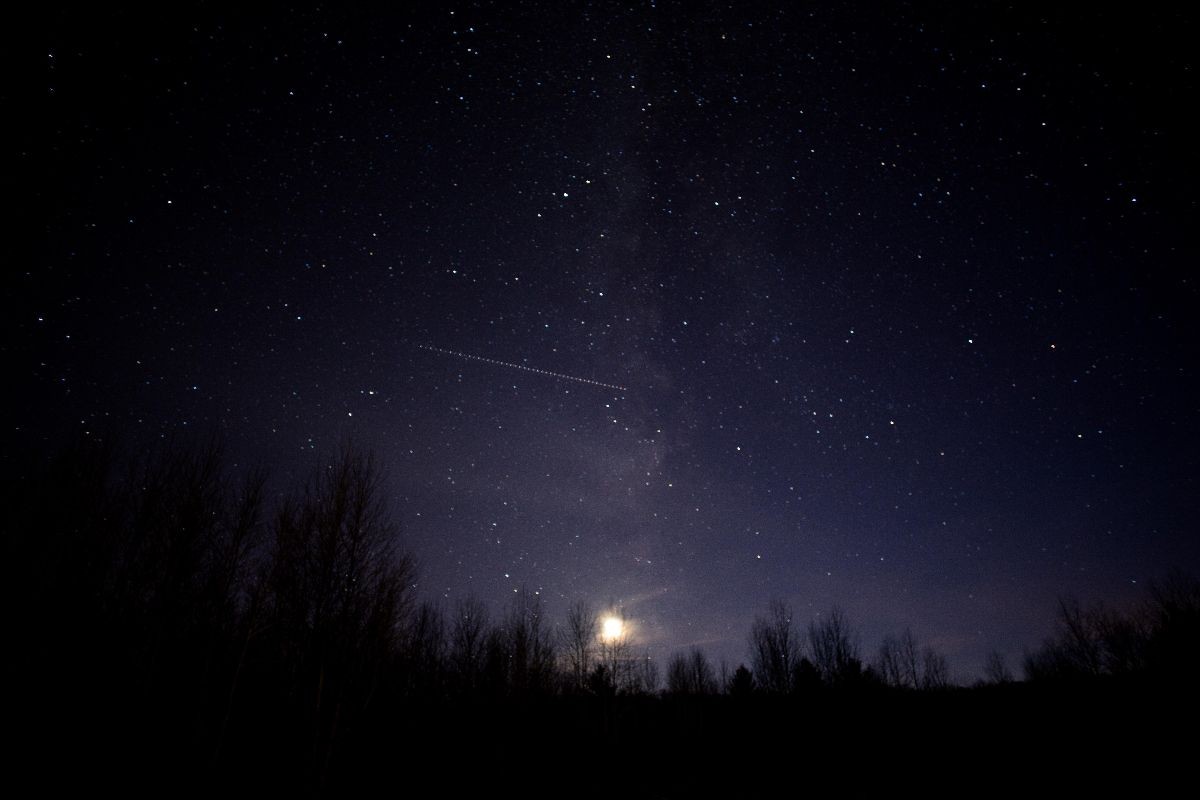
The "Christmas star" is thought to be Sirius, the "Dog Star" which is the birghtest star in the night sky.
The number of wise men that sought to find the new Messiah is not mentioned anywhere in the bible, nor is it mentioned that they were kings. They were more likely either persian priests or astronomers.


 Last and not least, we have the cool stuff, or fun stuff (I got this idea from my friend Tom Keyes- whose name rhymes with "eyes" and not "keys"[Hi Tom] who started a video blog of his own, while dealing with some pretty serious health issues.) In my free time, I've gotten pretty active in an online game called "Neverwinter", which is based on the newest edition of Dungeons and Dragons. Since starting up again in August, I have gotten four characters to level 60 (the current level cap) and have about seven more that I am working on. I joined a pretty cool guild called "the Neverwinter Nine" as well, which reminds me a lot of the old pre-endgame madness "Eternity Matters" guild that I belonged to when I played WoW. If I need help with a specific quest or boss, usually one or more of the members usually jumps in to assist. The plus is that I got Kat active as well. She only has five characters, not quite as many as Altoholic me, but she enjoys the game.




 Posts
Posts


